
Every year, without fail, teams across industries come together, fill up whiteboards with ambitious goals, and walk out of the room feeling genuinely excited. Three months later? Half those goals are buried under daily emails, shifting priorities, and the quiet understanding that nobody quite knows who owns what. Sound familiar?
Well, the problem isn’t that organizations lack ambition. They have plenty of it. What they lack is a reliable bridge between intention and execution. The SMART framework was designed to be exactly that bridge. But knowing what SMART stands for and actually using it to drive real outcomes are two very different things.
Let us walk you through not just what SMART goals mean, but how to make them stick, how to move from a well-worded goal on a slide deck to something your team actually works toward every single week.
What SMART Really Means (And What People Get Wrong)
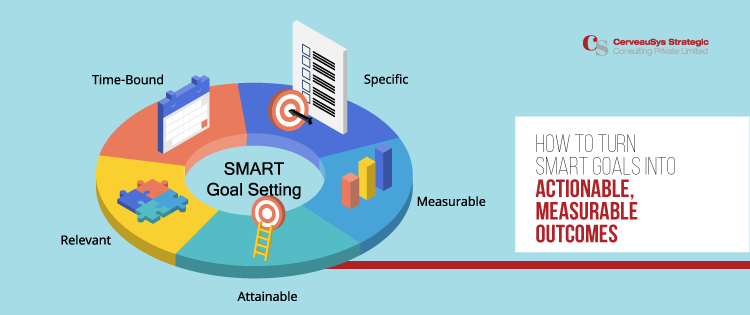
Most people know the acronym. Specific, Measurable, Achievable, Relevant, Time-bound.
The issue is that knowing the label doesn’t mean you’re applying the concept correctly. Specific doesn’t just mean “not vague.” It means the goal is precise enough that two different people reading it would arrive at the same understanding of what success looks like. Measurable means there’s a number, a benchmark, or a clear indicator you can track, not just a feeling. Achievable means it’s ambitious but grounded in your actual capacity, resources, and constraints. Relevant means it connects directly to something the business genuinely cares about right now, not something that made sense two years ago. And Time-bound means there’s a real deadline, not a loose “by end of year” that gets silently extended every quarter.
“A goal without a timeline is just a wish wearing a business suit.”
Here’s where most teams go wrong: they write goals that tick the SMART boxes on the surface but miss the spirit entirely. “Increase sales by 20% this quarter” looks SMART. But if there’s no shared understanding of what “sales” includes, who’s responsible for which piece, and what weekly progress looks like; it’s not really SMART.
How to Turn a SMART Goal into a Real Action Plan
Once you have a properly written SMART goal, the real work begins. A goal is the destination. An action plan is the route. And without a route, even the clearest destination is just a point on a map you’re not moving toward.
Break Goals Into Monthly Milestones
If the goal is to grow customer retention by 15% over six months, what does month one look like? Maybe it’s completing a customer feedback audit. Month two might be launching a revised onboarding experience. Month three could be measuring early churn indicators. Each milestone should be concrete enough that you know, at the end of that month, whether you hit it or not.
Assign Clear Ownership
Next, assign ownership, and be specific. Not “the marketing team.” One person. Accountability diffuses when it’s spread across a group. That one person doesn’t have to do everything alone, but they are the one who raises a flag if things aren’t moving. Learn more about high performers retention to ensure your top talent drives these goals.
Build Consistent Checkpoints
Finally, build in checkpoints. Weekly is ideal for most operational goals. These don’t need to be long meetings; fifteen minutes of honest status sharing is worth more than a two-hour quarterly debrief where everyone pieces together what happened three months ago from memory.
How to Measure SMART Goals Progress
Here’s something that trips up a lot of organizations: they hear “measurable” and immediately think dashboards, BI tools, and KPI frameworks with seventeen layers. That kind of over-engineering is its own form of avoidance. At CerveauSys Strategic, we say, if your measurement system takes longer to maintain than the actual work does, it’s not helping you.
- Keep measurement simple and avoid overcomplication.
- Focus on 2–3 key metrics that matter.
- Make progress easy to understand quickly.
- Prioritize regular, honest check-ins.
- Use measurement for improvement, not just evaluation.
Tie this to your performance management system for seamless tracking.
Make SMART Goals a Culture, Not a Checklist
The organizations that get the most out of SMART goals are those that treat the framework not as a quarterly exercise, but as a way of thinking. When your team naturally asks “what does success look like?” and “who owns this?” in everyday conversations, that’s when real change starts to happen consistently.
SMART goals are a starting point, not a finish line. The goal is to get to a place where your team doesn’t need to be reminded to think in terms of outcomes, where that just becomes how you work. As a strategy and management consulting firm in Pune, we have worked with organizations across industries to define direction, align teams, and implement frameworks that turn ambition into consistent execution.
If your organization is ready to make SMART goals work the way they were always meant to, reach out to CerveauSys Strategic and start the conversation.